





React error tracking installation
- 1
Install the package
RequiredInstall
posthog-jsand@posthog/reactusing your package manager: - 2
Add environment variables
RequiredAdd your PostHog API key and host to your environment variables. For Vite-based React apps, use the
VITE_PUBLIC_prefix:.env - 3
Initialize PostHog
RequiredWrap your app with the
PostHogProvidercomponent at the root of your application (such asmain.tsxif you're using Vite):main.tsxdefaults optionThe
defaultsoption automatically configures PostHog with recommended settings for new projects. See SDK defaults for details. - 4
Accessing PostHog in your code
RecommendedUse the
usePostHoghook to access the PostHog instance in any component wrapped byPostHogProvider:MyComponent.tsxYou can also import
posthogdirectly for non-React code or utility functions:utils/analytics.ts - 5
Send events
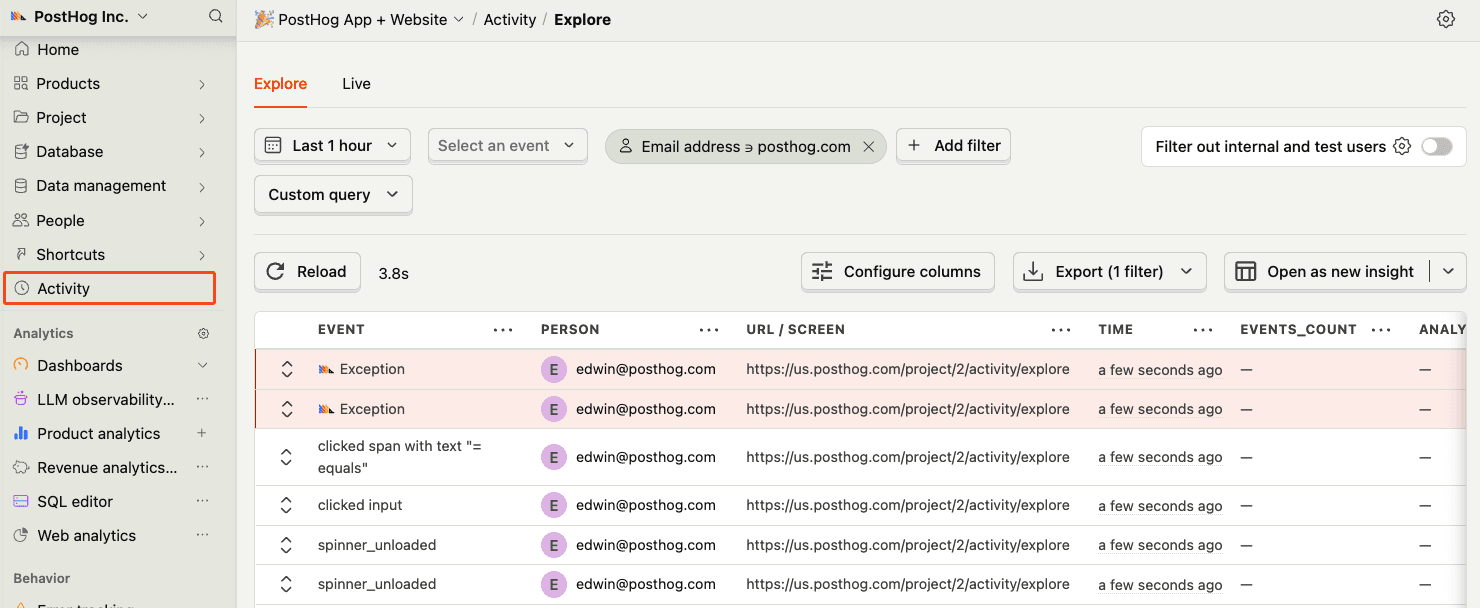
RecommendedClick around and view a couple pages to generate some events. PostHog automatically captures pageviews, clicks, and other interactions for you.
If you'd like, you can also manually capture custom events:
JavaScript - 6
Set up exception autocapture
RecommendedYou can enable exception autocapture for the JavaScript Web SDK in the Error tracking section of your project settings.
When enabled, this automatically captures
$exceptionevents when errors are thrown by wrapping thewindow.onerrorandwindow.onunhandledrejectionlisteners. - 7
Set up error boundaries
OptionalYou can use the
PostHogErrorBoundarycomponent to capture rendering errors thrown by components:JavaScript - 8
Manually capture exceptions
OptionalIt is also possible to manually capture exceptions using the
captureExceptionmethod:JavaScript - 9