







The best GrowthBook alternatives & competitors, compared


Contents
GrowthBook is an open source feature flagging and A/B testing platform. It's warehouse-native, meaning it connects to your existing data warehouse (BigQuery, Snowflake, Redshift, etc.) to analyze experiment results rather than collecting data itself.
GrowthBook has shipped a lot in recent releases, including product analytics (in beta), but it's still primarily focused on feature flags and experimentation. If you need session replay, error tracking, or surveys alongside your experiments, you'll likely need additional tools.
Here's how the best GrowthBook alternatives compare.
1. PostHog
- Founded: 2020
- Similar to: VWO, LaunchDarkly
- Typical users: Engineers and product teams
- Typical customers: Mid-size B2Bs and startups
What is PostHog?
PostHog (that's us 👋) is an all-in-one suite of dev tools. It combines feature flags, experimentation, product analytics, session replay, user surveys, and more into one platform. This means it's not only an alternative to GrowthBook but also tools like Mixpanel and Hotjar.
Key features
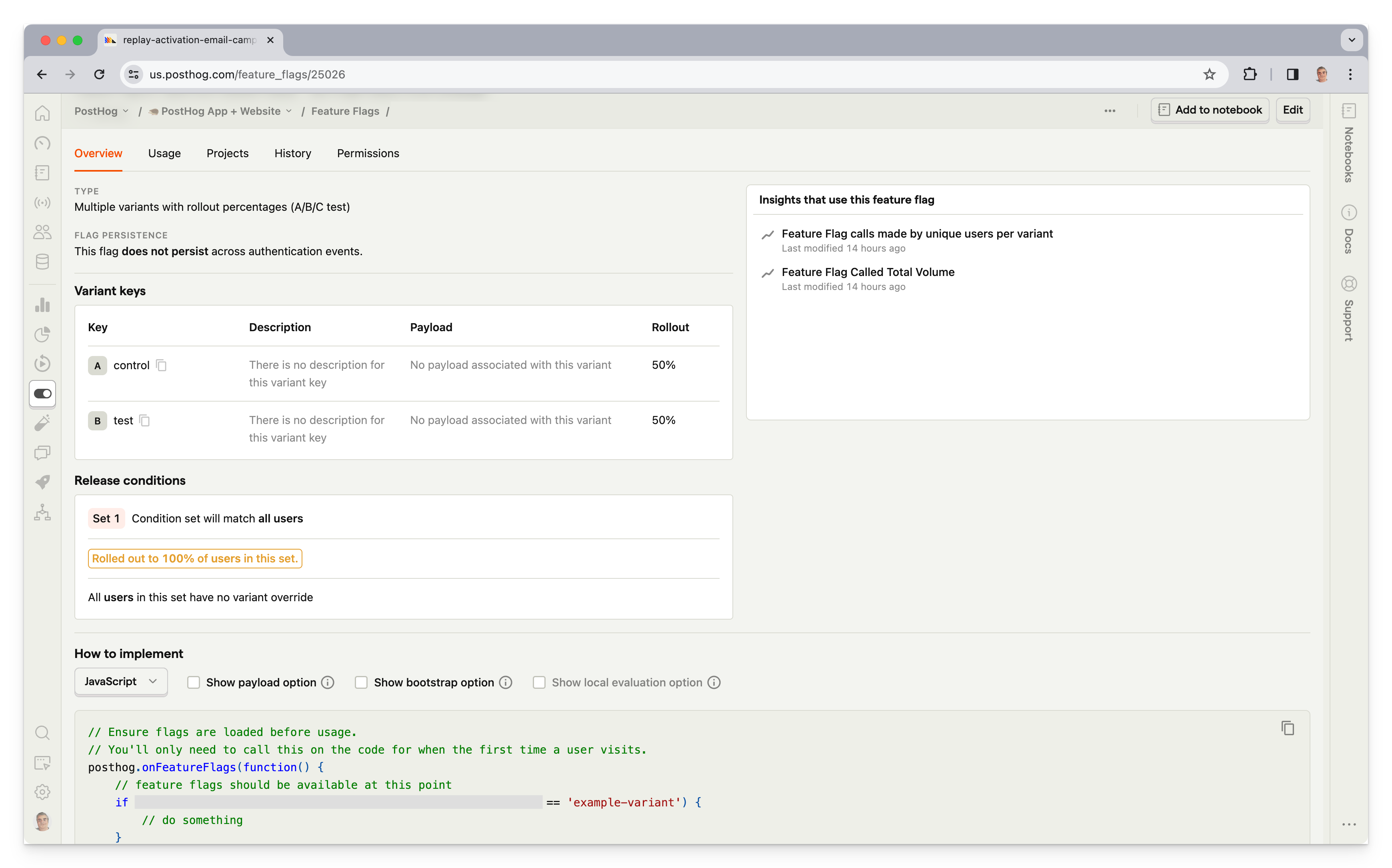
Feature flags: Rollout features safely with local evaluation (for faster performance), JSON payloads, and instant rollbacks.
A/B tests: Optimize your app and website with up to nine test variations and track impact on primary and secondary metrics. Calculate test duration, sample size, and statistical significance automatically.
Product analytics: Custom trends, funnels, user paths, retention analysis, and segment user cohorts. Also, direct SQL querying for power users.
Session replays: View exactly how users are using your site. Includes event timelines, console logs, network activity, and 90-day data retention.
Surveys: Target surveys by event or person properties. Templates for net promoter score (NPS), product-market fit (PMF) surveys, and more.
Error tracking: Capture exceptions and stack traces connected directly to session replays and feature flag evaluations.
LLM analytics: Track model performance, token costs, latency, and traces for teams building AI products.
How does PostHog compare to GrowthBook?
PostHog has all the features of GrowthBook and more. It includes GrowthBook's selling point of being an open source feature flag and experimentation platform while having features like a full product analytics suite, session replays, error tracking, and more.
On top of this, PostHog includes all the data you need to target flags and run tests, and features a built-in data warehouse. GrowthBook is warehouse-native, meaning it queries your existing data warehouse for experiment analysis – great if you already have one set up, but it means you need to bring your own data infrastructure.
Main differences between PostHog and GrowthBook
- PostHog is an all-in-one platform with analytics, session replay, error tracking, surveys, and more alongside feature flags and experiments. GrowthBook focuses on feature flags and experimentation, with product analytics recently added in beta.
- PostHog collects and stores event data directly. GrowthBook is warehouse-native – it queries your existing data warehouse (BigQuery, Snowflake, Redshift, etc.) for experiment results.
- PostHog uses usage-based pricing with generous free tiers. GrowthBook uses a combination of per-seat and usage-based pricing.
Main similarities between PostHog and GrowthBook
- Both offer feature flags with advanced targeting, local evaluation, and multivariate support.
- Both offer A/B testing with statistical significance calculations and Bayesian/Frequentist engines.
- Both have strong SDK coverage across major platforms and languages.
- Both are open source and offer free tiers.
- Both offer a managed warehouse solution for teams that don't want to manage their own data infrastructure.
Why do companies use PostHog?
According to reviews on G2, companies use PostHog because:
It replaces multiple tools: PostHog can replace LaunchDarkly (feature flags and A/B testing), Amplitude (analytics), and Fullstory (session replay and heatmaps). This simplifies workflows and ensures product data is all in one place.
Pricing is transparent and scalable: Users appreciate how PostHog's pricing scales as they grow. There's a generous free tier of one million flag requests and one million events per month, and if you stay under this, you can use it for free, forever.
They need a complete picture of users: PostHog includes every tool necessary to understand usage and improve your products. This means creating funnels to track conversion, watching replays to see where users get stuck, testing solutions with A/B tests, and gathering feedback with user surveys.
Bottom line
PostHog is an ideal alternative to GrowthBook. It includes both feature flags and an experimentation suite as well as being open source and free to use. Plus, you get product analytics, session replay, error tracking, and more.


Install PostHog with one command
Paste this into your terminal and make AI do all the work.

2. LaunchDarkly
- Founded: 2014
- Similar to: Flagsmith, DevCycle
- Typical users: Enterprise engineering teams
- Typical customers: Massive engineering-focused enterprises
What is LaunchDarkly?
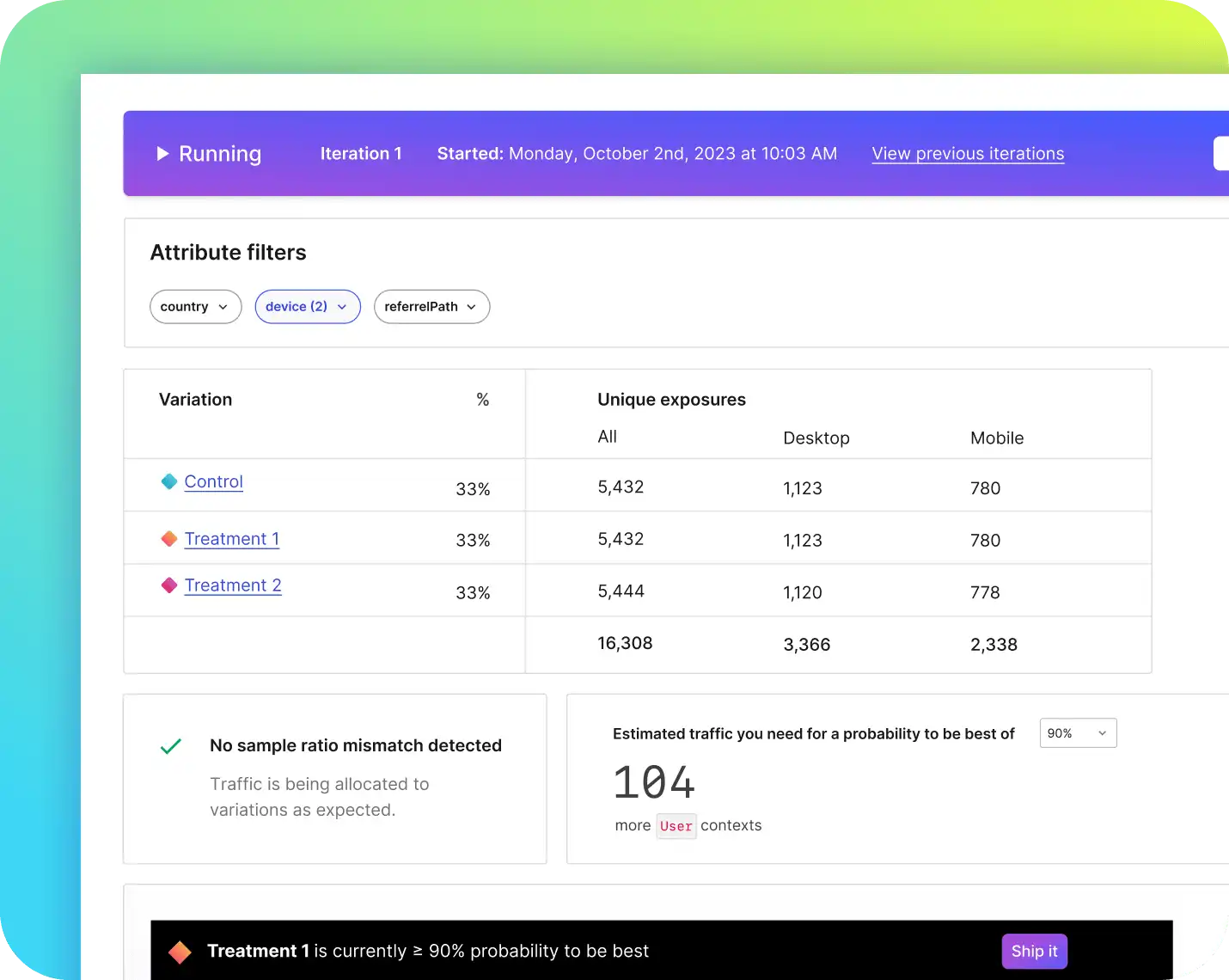
LaunchDarkly is a feature flag and A/B testing platform helping developers de-risk releases, target experiences, and optimize their product. In 2025, it expanded significantly – acquiring Highlight for session replay, error monitoring, logs, and traces, and Houseware for warehouse-native product analytics.
For enterprises, it also includes automation and governance features to ensure teams are following engineering best practices.
Key features
Feature flags: Control and target the release of features using multi-variate flags. Update them at runtime and use local evaluation for speed.
Experimentations: Run A/B/n tests against metric groups and segments. Easily discover and roll out winning variants.
Automation: Automate and schedule changes to flag state, progressive rollouts, and trigger workflows.
Governance: Audit flag changes. Get visibility into flag states across platforms. Use roles-based access controls to decide who can access and change flags.
Observability: Monitor releases in real time with session replay, error monitoring, logs, and distributed traces – all tied directly to feature flag context via Guarded Releases.
How does LaunchDarkly compare to GrowthBook?
GrowthBook positions itself as an open source alternative to LaunchDarkly, so it is no surprise their functionality is similar. Both focus specifically on feature flags and A/B testing for enterprises, but GrowthBook is missing some of the advanced features of LaunchDarkly.
Main differences between LaunchDarkly and GrowthBook
- LaunchDarkly offers enterprise governance features like automation workflows, progressive rollouts, stale flag cleanup, and approval workflows that GrowthBook lacks.
- LaunchDarkly is closed source but now offers self-serve pricing starting with a free Developer tier and a Foundation plan at $12/service connection/month. GrowthBook is open source with a free Starter plan and $40/user/month plus usage Pro plan.
- LaunchDarkly now offers warehouse-native product analytics (via Houseware) and observability including session replay, error monitoring, and traces (via Highlight). GrowthBook has product analytics in beta but no observability features.
Main similarities between LaunchDarkly and GrowthBook
- Both focus on feature flags and A/B testing as their core offering.
- Both support multivariate flags, local evaluation, and advanced targeting.
- Both offer experimentation with statistical significance analysis.
- Both provide broad SDK coverage across web, mobile, and server-side platforms.
Why do companies use LaunchDarkly?
According to G2 reviews, users appreciate these aspects of LaunchDarkly:
SDKs: Users appreciate how easy it is to integrate LaunchDarkly into their apps thanks to the range of SDKs it provides like JavaScript, Python, Android, and iOS.
Automations: LaunchDarkly provides automations like scheduled rollouts, rollout templates, DevOps pipeline integrations, and stale flag cleanups. Developers mention this as a big selling point.
Speed and availability: High uptime and speed are critical for developers. Users highlight local caching and edge computing integrations as critical ways LaunchDarkly supports these.
Bottom line
LaunchDarkly has stronger features than GrowthBook. For enterprises, it is worth considering. For smaller teams, the pricing model (per-service-connection rather than per-seat) and closed-source nature may be limiting.
3. Flagsmith
- Founded: 2018
- Similar to: Unleash, DevCycle
- Typical users: Enterprise engineering teams
- Typical customers: Enterprises with strict regulatory requirements
What is Flagsmith?
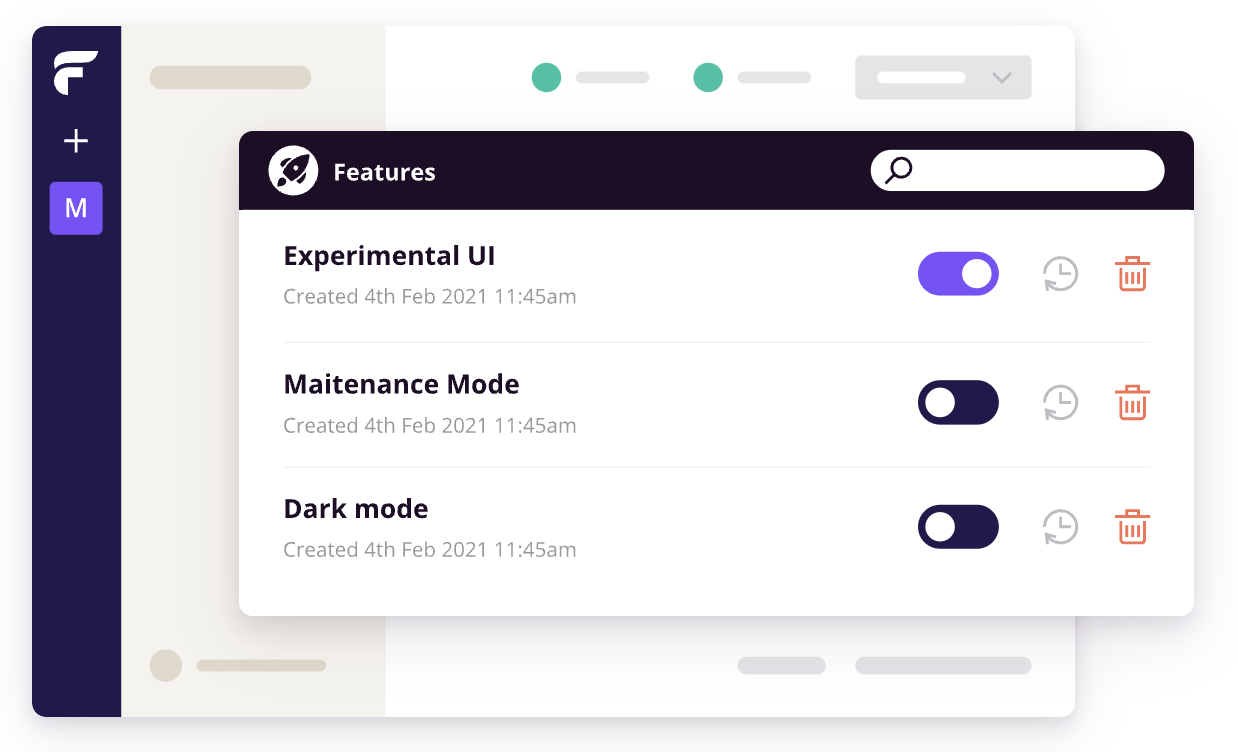
Flagsmith is an open source feature flag and remote configuration service. It enables developers to release and manage features across web, mobile, and server apps. Along with a cloud hosted option, you can host Flagsmith in your own private cloud or on-premise.
Key features
Feature flags: Manage features across multiple environments. Schedule and target releases to users and percentages.
A/B testing: Run A/B/n and multivariate tests and send flag data to an analytics platform for analysis.
Remote configuration: Alter your application at runtime without redeploying.
Governance: Create and manage approval workflows. Keep audit logs of flag changes.
How does Flagsmith compare to GrowthBook?
Both Flagsmith and GrowthBook are open source feature flag platforms. Their feature sets are very similar. Both rely heavily on integrations with third party services. For example, Flagsmith relies on third party services to do A/B testing analysis.
Main differences between Flagsmith and GrowthBook
- Flagsmith relies on third-party analytics platforms for A/B test analysis. GrowthBook has a built-in stats engine that queries your data warehouse directly.
- GrowthBook has an advanced experimentation platform with Bayesian and Frequentist engines, CUPED, and post-stratification. Flagsmith's experimentation doesn't have any statistics built-in.
- Flagsmith offers remote configuration as a core feature. GrowthBook supports remote config via feature flag JSON payloads but doesn't position it as a primary use case.
- GrowthBook recently added Product Analytics (beta) and AI features. Flagsmith doesn't offer either.
Main similarities between Flagsmith and GrowthBook
- Both are open source and can be self-hosted or used as a cloud service.
- Both offer feature flags with targeting, environments, and scheduling.
- Both have self-serve pricing with free tiers.
- Both provide SDKs for major platforms and languages.
Why do companies use Flagsmith?
According to reviews on G2, companies use Flagsmith because:
It's simple: Some feature flagging tools can get complicated, but Flagsmith remains simple with its basic features and segmentation. Users say it puts DevOps into the hands of developers.
SDKs: Flagsmith developed a range of SDKs from iOS to Python to JavaScript. This enables users to easily add and use it in their apps.
Integrations: Users appreciate that Flagsmith integrates with project management, integration pipeline, and analytics tools.
Bottom line
If you are looking for an open source feature flagging tool, Flagsmith makes a good alternative. It's also good if you have everything but an A/B testing tool setup. If neither is true for you, there are likely better options.
4. VWO
- Founded: 2009
- Similar to: PostHog, AB Tasty
- Typical users: Product managers, engineers, UX designers
- Typical customers: Enterprise B2B and B2C companies optimizing customer experiences
What is VWO?
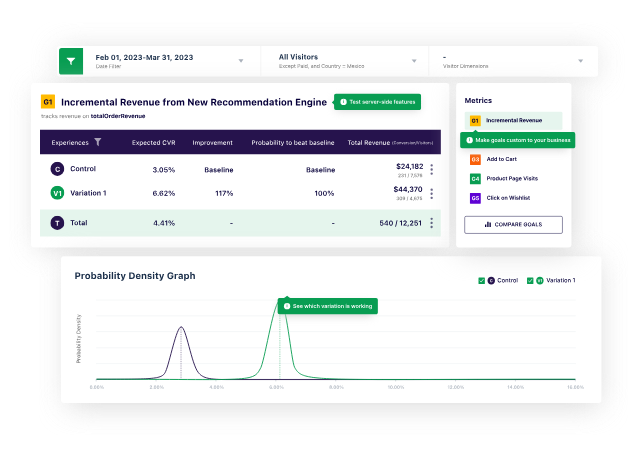
VWO is a digital experience optimization platform that aims to maximize conversion with tools like A/B testing, personalization, funnels, heatmaps, session replay, and customer analytics.
The VWO platform is home to a bunch of different products including testing, insights, data, personalize, plan, and web rollouts. Each has its own feature sets and pricing.
Note: VWO and AB Tasty announced a merger in January 2026 to form a unified digital experience optimization platform. Both products continue to operate independently while the deal closes.
Key features
A/B testing: Improve and optimize experiences and conversions with web, mobile, and server-side A/B testing.
Data platform: Collect and analyze customer data across your stack using SDKs, third-party integrations, and direct uploads.
Insights: Understand your users with session recordings, heatmaps, analytics, and surveys.
Personalization: Create and tailor user journeys and campaigns for specific audiences, locations, and times.
Planning: Ideate, prioritize, and plan optimization campaigns in one location. Connect them directly to data as well.
How does VWO compare to GrowthBook?
VWO and GrowthBook have slightly different focuses. Although they both have experimentation, VWO adds personalization and behavioral analytics to its stack. GrowthBook has a greater focus on feature flags.
Main differences between VWO and GrowthBook
- VWO includes personalization, session replay, heatmaps, and surveys alongside experimentation. GrowthBook focuses on feature flags and A/B testing.
- VWO offers a visual editor for creating tests without code. GrowthBook requires code changes for most experiments.
- GrowthBook is open source and can be self-hosted. VWO is closed source and cloud-only.
- GrowthBook uses per-seat pricing. VWO uses Monthly Tracked Users (MTU) pricing.
Main similarities between VWO and GrowthBook
- Both offer A/B testing with multivariate support and statistical significance calculations.
- Both support feature flags for progressive rollouts.
- Both have self-serve pricing with free trials or free tiers.
- Both provide APIs for programmatic access to experiments and flags.
Why do companies use VWO?
Reviewers on G2 are big fans of VWO for these reasons:
Support: VWO's support staff are knowledgeable, helpful, and responsive. This helps users get the most out of the platform and leaves them with a positive impression.
Multi-function: Users like that they can combine A/B tests with surveys, funnels, session replays, and analysis tools to optimize the complete user experience.
Becoming data-driven: VWO enables technical and non-technical to make more and better data-driven decisions by being the complete source of experience data.
Bottom line
VWO is an extensive optimization platform. It can be a good alternative to GrowthBook, especially if you're in the ecommerce or B2C space. The downside is that it only offers a free trial and isn't open source.
5. Unleash
- Founded: 2015
- Similar to: Flagsmith, DevCycle
- Typical users: Regulatory and security conscious developers
- Typical customers: Large B2B enterprises
What is Unleash?
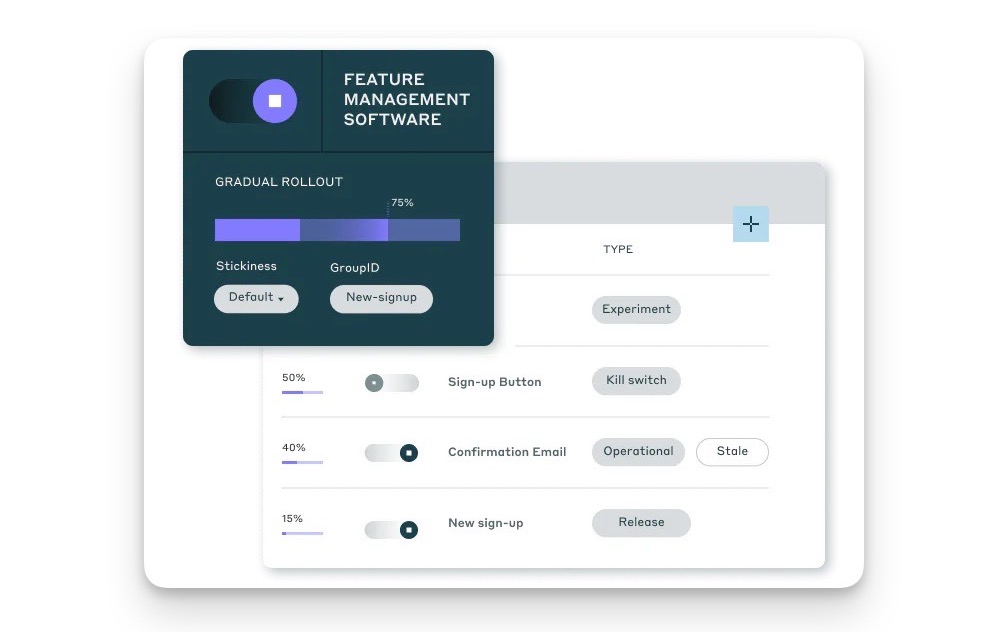
Unleash is a feature management platform that provides an overview of all features across your applications and services. The platform empowers engineering teams to implement A/B tests via feature toggles and offers accurate user targeting.
Key features
Feature flags: A developer-focused feature flag tool that streamlines the software release process.
Approvals: Require approvals to make changes to feature flags to ensure compliance.
Self-hostable: Choose either fully managed or self-hosted to fit with your needs.
Environments: Configure flags, targeting, and approvals differently for dev, staging, prod.
How does Unleash compare to GrowthBook?
Unleash is very similar to GrowthBook, but doesn't have A/B testing built in. Instead, it provides the feature flag logic and relies on a third party tool, like PostHog, to do the analysis. Other features, including being open source, are almost identical.
Main differences between Unleash and GrowthBook
- Unleash doesn't have built-in A/B testing analysis – it provides the feature flag logic and relies on third-party tools for experiment analysis. GrowthBook has a full stats engine.
- GrowthBook is warehouse-native and connects to your data warehouse for experiment metrics. Unleash focuses purely on feature flag delivery.
- GrowthBook recently added Product Analytics (beta) and AI features. Unleash doesn't offer analytics or AI.
Main similarities between Unleash and GrowthBook
- Both are open source and can be self-hosted or used as cloud services.
- Both offer feature flags with targeting, environments, and gradual rollouts.
- Both support local evaluation for fast flag delivery.
- Both have self-serve pricing with free tiers.
Why do companies use Unleash?
According to G2, these are the
Self-hostable: Many users mention they are using the open source version of Unleash and self-hosting. This means teams with compliance concerns can integrate it into their existing infrastructure.
Developer-focused: Unleash focuses on developers. Its tooling and SDKs make it relatively simple for them to implement feature management.
Simple UI: Even though Unleash is developer-focused, its UI is still praised for making it easy to create and manage toggles. Developers mentioned non-developers are able to set up and manage toggles without help.
Bottom line
Unleash is very focused on feature flags, and if that is what you are looking for, it makes a good alternative to GrowthBook. If you're searching for A/B testing or other types of optimization and analysis tools, it's best to look elsewhere.
6. DevCycle
- Founded: 2022
- Similar to: Unleash, Flagsmith
- Typical users: Development teams
- Typical customers: All stages of B2B software companies
What is DevCycle?
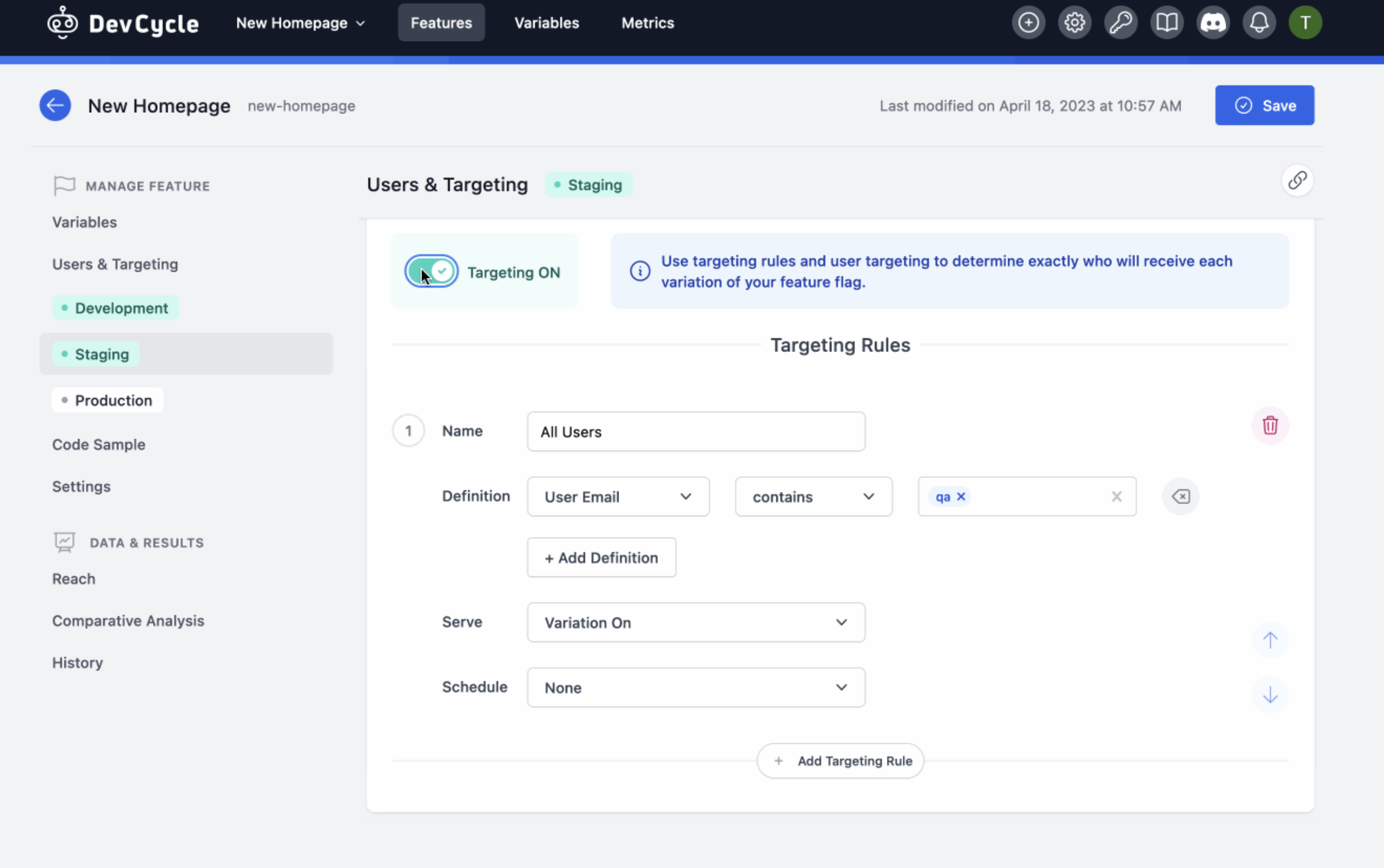
DevCycle is a startup launched out of Taplytics, another A/B testing platform. It is a feature flag management platform built for developers and designed for speed. It has a suite of dev tool integrations, CLI, and simple interface. It uses the OpenFeature standard, which enables it to be swapped easily with other providers.
Key features
Feature flags: Easily and safely rollout and rollback features to deploy faster and reduce risk. Use automation to put an end to manual changes.
Integrations: Combine with the tools you are already using for your workflow like GitHub, Terraform, Datadog, and Jira.
A/B testing: Run experiments and evaluate the impact of new features. Do multi-armed bandits to compare variations.
Developer-focused: Serverless architecture, edge decisioning support, a CLI, and a robust API help developers make full use of DevCycle.
How does DevCycle compare to GrowthBook?
DevCycle has similar upsides and downsides to GrowthBook, but is not open source. It's pulled away from A/B testing as a focus and now mainly focuses on feature flagging.
Main differences between DevCycle and GrowthBook
- DevCycle is closed source. GrowthBook is open source and can be self-hosted.
- DevCycle has pulled away from A/B testing and focuses mainly on feature flags. GrowthBook has a full experimentation platform with a stats engine.
- DevCycle uses edge computing and serverless architecture for fast flag delivery. GrowthBook uses SDK-based evaluation with a proxy option.
- GrowthBook is warehouse-native and recently added Product Analytics (beta). DevCycle doesn't offer analytics.
Main similarities between DevCycle and GrowthBook
- Both offer feature flags with targeting, environments, and gradual rollouts.
- Both have self-serve pricing with free tiers.
- Both use the OpenFeature standard for interoperability.
- Both provide SDKs for major platforms and developer-focused tooling (CLI, API).
Why do companies use DevCycle?
According to G2, reviewers appreciate two main areas of DevCycle:
Simplicity: DevCycle makes it easy for people to get feature flags set up and start improving their feature management process. Users mention the SDKs and documentation makes implementation easy.
Integrations: The fact that DevCycle integrates with GitHub and Jira helps developer workflow.
Bottom line
Because DevCycle is very similar to GrowthBook, it makes for a good alternative. If you have a strict regulatory environment and could benefit from open source or self-hosting, other options are better.
7. AB Tasty
- Founded: 2013
- Similar to: VWO, LaunchDarkly
- Typical users: Marketing and product teams
- Typical customers: Large retail and entertainment companies
What is AB Tasty?
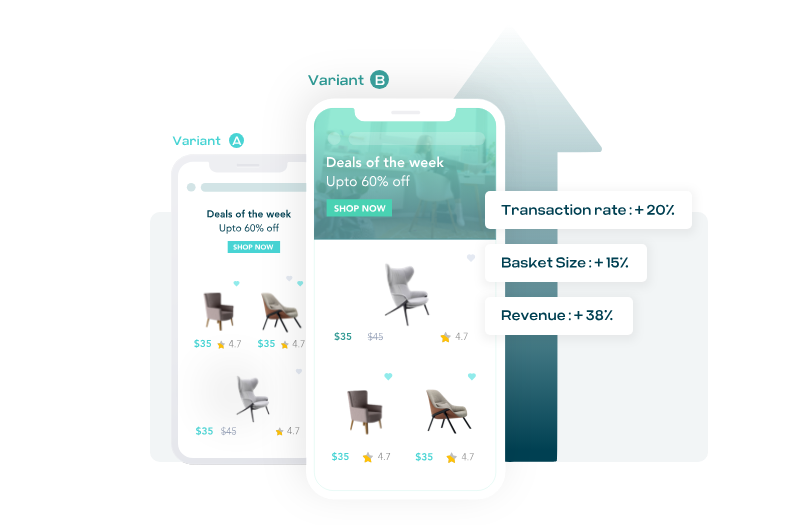
AB Tasty is a platform for optimizing brand and product experiences. This includes web and feature experimentation, personalization, search, and recommendations.
It helps teams build better end-to-end digital user experiences that drive ROI, engagement, and loyalty. The company focuses on retail, entertainment, and ecommerce companies.
Note: VWO and AB Tasty announced a merger in January 2026 to form a unified digital experience optimization platform. Both products continue to operate independently while the deal closes.
Key features
Web experimentation: Run A/B and multivariate tests easily with low/no-code tools like a visual editor and pre-built widgets.
Feature experimentation: Test new features on specific users or segments in your server-side or mobile apps.
Personalization: Create personalized experiences with its audience builder and segmentation tools.
Rollouts: Use feature flags to progressively deliver, manage, and rollback new features.
Recommendations: Show the right products at the right time in customer journeys. Provide unique suggestions to increase conversion.
How does AB Tasty compare to GrowthBook?
AB Tasty is a fully featured experimentation and feature flagging platform. It also includes more optimization tools like personalization and recommendations. A big downside is that it lacks self-service and isn't open source.
Main differences between AB Tasty and GrowthBook
- AB Tasty includes personalization, product recommendations, and a visual editor for no-code testing. GrowthBook focuses on developer-first feature flags and experimentation.
- AB Tasty is closed source and requires sales contact for pricing. GrowthBook is open source with transparent pricing.
- GrowthBook can be self-hosted. AB Tasty is cloud-only.
- AB Tasty targets marketing and product teams in ecommerce and retail. GrowthBook targets engineering teams.
Main similarities between AB Tasty and GrowthBook
- Both offer feature flags with progressive rollouts and targeting.
- Both support A/B and multivariate testing with statistical analysis.
- Both provide APIs for programmatic flag and experiment management.
- Both offer server-side experimentation for mobile and web apps.
Why do companies use AB Tasty?
According to G2 reviews, users choose AB Tasty for the following reasons:
Ease-of-use: Non-technical users can create and manage simple A/B tests using the visual editor. Reviewers also praise how simple and intuitive the platform is.
Support: AB Tasty's customer support receives high praise. The company even provides an option to help you with recommendations and implementation (for a cost) if you need it.
Widgets: Users enjoy AB Tasty's collection of pre-built widgets such as alerts, banners, and modals to help personalize experiences.
Bottom line
For ecommerce companies needing a full suite of optimization tools, AB Tasty is a solid alternative. Developer-focused companies might prefer another option on this list.
Which GrowthBook alternative should you choose?
- Want feature flags, A/B testing, analytics, session replay, error tracking, surveys, and more in one platform? Go with PostHog.
- Need enterprise-grade feature management with governance, automation, and progressive rollouts at scale? LaunchDarkly is built for that.
- Looking for a lightweight, open source feature flag tool and already have analytics set up elsewhere? Try Flagsmith.
- Ecommerce or CRO team wanting visual A/B testing, personalization, and heatmaps? VWO covers the full optimization stack.
- Need a focused, open source feature flag platform with strong self-hosting and compliance controls? Unleash is a good choice.
- Want fast, developer-focused feature flags with edge computing and CI/CD integrations? DevCycle is worth exploring.
- Marketing or retail team that needs personalization, recommendations, and no-code testing alongside experiments? AB Tasty excels here.
Is PostHog right for you?
Here's the (short) sales pitch.
We're biased, obviously, but we think PostHog is the perfect GrowthBook replacement if:
- You value transparency. We're open source and open core.
- You want all the tools you need to build a better product like product analytics, session replay, and surveys.
- You want to try before you buy. We're self-serve with a generous free tier.
It's completely free to get started – no credit card required. Our setup wizard handles configuration in minutes, or you can check out our docs to do it yourself.
Install PostHog with one command
Paste this into your terminal and make AI do all the work.
Frequently asked questions
What's the main difference between PostHog and GrowthBook?
PostHog is an all-in-one platform that combines feature flags, A/B testing, product analytics, session replay, surveys, error tracking, LLM analytics, and more. GrowthBook focuses on feature flags and experimentation, with Product Analytics added in beta (as of late 2025).
The biggest architectural difference is data: PostHog collects and stores event data directly, while GrowthBook is warehouse-native – it queries your existing data warehouse for experiment analysis. This makes GrowthBook great if you already have a mature data stack, but means more setup if you don't.
Why look for GrowthBook alternatives?
Common reasons include: needing features GrowthBook doesn't offer (like session replay, error tracking, or surveys), wanting an all-in-one platform instead of stitching together multiple tools, or wanting usage-based pricing instead of per-seat pricing.
Some teams are also reevaluating their experimentation stack after the Statsig acquisition by OpenAI.
Does GrowthBook have product analytics?
GrowthBook launched Product Analytics in beta in late 2025. It's still early – PostHog's analytics suite includes funnels, retention, user paths, cohorts, lifecycle analysis, SQL querying, and dashboards that have been production-ready for years.
For more product analytics tool alternatives, check out our guide to the best product analytics tools.
How much does GrowthBook cost?
GrowthBook uses per-seat pricing: the Starter plan is free for up to 3 users (cloud or self-hosted), the Pro plan is $40/seat/month for up to 50 seats (cloud) or 100 seats (self-hosted), and Enterprise pricing requires contacting sales.
PostHog uses usage-based pricing with a generous free tier: 1 million events, 5,000 session replays, and 1 million feature flag requests free every month. Most PostHog users (90%+) stay on the free tier.
Does GrowthBook have AI features?
Yes. GrowthBook has added AI capabilities including natural language SQL generation, experiment hypothesis checking, experiment summaries, and an MCP server for integration with AI coding tools.
PostHog offers session replay summaries, an MCP server for AI coding tools like Cursor and Claude Code, and PostHog AI for generating insights and querying your data in natural language.
Which GrowthBook alternative has the best free tier?
PostHog has the most generous free tier among GrowthBook alternatives: 1 million events, 5,000 session replays, 1 million feature flag requests, and 1500 survey responses per month – with no limits on team size. GrowthBook's Starter plan is free for up to 3 seats.
Unleash has an open source version you can self-host for free.
Which GrowthBook alternatives are open source?
PostHog, Flagsmith, and Unleash are all open source alongside GrowthBook. PostHog and GrowthBook are open core (core product is open source, some enterprise features are not). LaunchDarkly, VWO, AB Tasty, and DevCycle are all closed source. See our guide to the best open-source feature flag tools for more.
Can I migrate from GrowthBook to PostHog?
Yes. PostHog provides migration guides and supports importing historical event data. Since GrowthBook is warehouse-native and doesn't store your event data itself, migration typically involves pointing PostHog's SDKs at your application and optionally importing data from your warehouse.
Does PostHog offer EU hosting?
Yes. PostHog offers EU-hosted cloud with data stored exclusively in the EU. PostHog is also SOC 2 certified, GDPR-ready, and HIPAA-ready.
Which is better for A/B testing: PostHog or GrowthBook?
GrowthBook is stronger for data science teams that want granular control over statistical methods – it offers CUPED, post-stratification, testing corrections, and warehouse-native metric analysis.
PostHog is better for engineering and product teams that want to set up and analyze experiments without writing SQL or connecting external services, with results tightly integrated into analytics, replays, and feature flags. It offers has a robust, customizable stats engine with both Bayesian and Frequentist modes.
What are the best A/B testing and feature flag tools in 2026?
The top A/B testing and experimentation tools in 2026 include:
- PostHog – Best all-in-one platform with A/B testing, feature flags, analytics, and more
- GrowthBook – Best open source warehouse-native experimentation platform
- LaunchDarkly – Best for enterprise feature management with advanced governance
- Statsig – Best for large-scale experimentation (now owned by OpenAI)
- VWO – Best for ecommerce and CRO teams wanting visual A/B testing
- Optimizely – Best for enterprise digital experience optimization

Subscribe to our newsletter
Product for Engineers
Read by 100,000+ founders and builders
We'll share your email with Substack
PostHog is an all-in-one developer platform for building successful products. We provide product analytics, web analytics, session replay, error tracking, feature flags, experiments, surveys, LLM analytics, data warehouse, CDP, and an AI product assistant to help debug your code, ship features faster, and keep all your usage and customer data in one stack.